Top Pierrot Characters in Anime
5 min read

Thinking of this scenario: a figure in white makeup, a ruffled collar, and a painted smile that hides unspeakable sorrow. This is Pierrot, the classical French pantomime character who has captivated audiences for centuries. But what happens when Japanese anime creators take this melancholic clown archetype and reimagine it through their unique storytelling lens? The result is a fascinating collection of characters that range from comedic to absolutely terrifying.
 Editor's Pick
Clown Tulle Ruffled Collar Retro Renaissance Neck Ruff Cotton
Mesh, tulle, pleats, layered, ribbon lace-up.
- ✓ Victorian, Renaissance, Elizabethan costume props
- ✓ A-class soft cotton, skin-friendly, can be worn 24/7 without any itch or irritation
As an Amazon Associate, we earn from qualifying purchases.
Pierrot, the sad clown of French theatrical tradition, represents duality at its finest, joy masking pain, innocence hiding tragedy, laughter concealing tears. In traditional pantomime, Pierrot is the lovesick fool, forever pining for Columbine while being outsmarted by the cunning Harlequin. His white face and naive demeanor make him sympathetic, yet there's always something unsettling lurking beneath that painted smile.
Anime has embraced this archetype with open arms, transforming it into something uniquely Japanese. From cybernetic assassins to magical girl villains, Pierrot characters in anime embody the same tragic duality as their theatrical ancestor, but with distinctly darker and more complex interpretations. Let's explore the top Pierrot characters that have left their mark on anime history.
5. Pierrot (Yakitate!! Japan)

Starting our list with perhaps the most lighthearted interpretation, the Pierrot character in Yakitate!! Japan stays truest to the classical pantomime roots. This bread-baking comedy anime features a character directly based on the stock pantomime figure, complete with the traditional aesthetic elements that define Pierrot. While not as psychologically complex as other entries on this list, this character serves as a bridge between the historical Pierrot and anime's more creative interpretations. The inclusion demonstrates how even in comedy series, Japanese creators pay homage to Western theatrical traditions, using familiar archetypes to create memorable supporting characters.
4. Pierrot (Sailor Moon R)

In episode 50 of Sailor Moon R, we encounter a Cardian named Pierrot, commanded by the alien Alan. As part of the "monster of the week" format that defined magical girl anime of the 1990s, this Pierrot embodies the darker implications of the clown figure. Cardians in Sailor Moon R are created from cards and sent to drain human energy, and Pierrot's design reflects the unsettling nature of this mission. The character's appearance incorporates classic Pierrot elements—the white face, the costume—but twists them into something more sinister. This transformation from innocent entertainer to energy-draining monster perfectly captures how anime adapts Western archetypes, maintaining the visual language while completely reimagining the character's purpose and nature.
3. King Pierrot (Smile Pretty Cure!)

As the ruler of the Bad End Kingdom in Smile Pretty Cure!, King Pierrot represents a fascinating inversion of what Pierrot traditionally symbolizes. Where the classical Pierrot is a figure of sadness pretending to be happy, King Pierrot rules over a kingdom dedicated to creating bad endings and spreading despair. His design amplifies the creepy clown aesthetic to nightmarish proportions, with exaggerated features that would feel at home in a horror film.
What makes King Pierrot particularly interesting is how he embodies the modern "evil clown" trope while still maintaining connections to the original archetype. He's a primary antagonist in a children's series, yet his thematic weight—representing the corruption of joy into despair—carries surprising depth. The character demonstrates how the Pierrot figure can serve as a vessel for exploring darkness even in the most colorful, optimistic anime genres.
2. Pierrot (D.Gray-man)

D.Gray-man's Pierrot is a Level 2 Akuma appearing in the Ghost of Matera Arc, and this interpretation taps directly into the tragic essence of the Pierrot archetype. Akuma in D.Gray-man are tragic creatures—souls of the dead bound to mechanical weapons, forced to kill against their will.
A Pierrot-type Akuma is almost poetically appropriate; the character embodies the ultimate expression of the sad clown, a being trapped in an existence of enforced violence while retaining remnants of their former humanity. The Level 2 designation indicates increased power and evolution, suggesting this Pierrot has experienced enough pain and transformation to become something more dangerous than its original form. This character represents anime's ability to take a theatrical archetype and weave it into complex supernatural mythology, creating something that honors the source material while building entirely new layers of meaning.
1. Mad Pierrot/Tongpu (Cowboy Bebop)

If there's one Pierrot character that has achieved legendary status in anime, it's Mad Pierrot from Cowboy Bebop's "Pierrot le Fou" episode. Tongpu, also known as Mad Pierrot, is a masterclass in character design and psychological horror. This enhanced cyborg assassin possesses the mind of a child trapped in a body capable of devastating violence. His appearance directly references classical Pierrot imagery—the white face paint, the theatrical costume—but everything is twisted into something nightmarish.
What makes Mad Pierrot truly unforgettable is the tragic backstory underlying his madness. Created as part of a secret government experiment, Tongpu was subjected to torture and enhancement procedures that shattered his psyche, leaving him with superhuman abilities but the emotional capacity of a traumatized child. He giggles like an innocent while committing murder, switches between playful and murderous in seconds, and becomes terrified and enraged when confronted with things he cannot understand or control.
The "Pierrot le Fou" episode is consistently ranked among Cowboy Bebop's best, and for good reason. It explores themes of innocence corrupted, the monster created by society's cruelty, and the thin line between laughter and tears. Mad Pierrot embodies everything that makes the Pierrot archetype so compelling—he's simultaneously sympathetic and terrifying, tragic and dangerous, child and monster. When he finally meets his end in an abandoned amusement park, surrounded by the remnants of childhood joy, it's both satisfying and heartbreaking.
Why Pierrot Resonates in Anime
The enduring appeal of Pierrot characters in anime stems from Japanese storytelling's affinity for exploring duality and hidden depths. Anime excels at creating characters who wear masks—both literal and figurative—and Pierrot, with his painted face and forced smile, is the ultimate masked figure. The archetype allows creators to explore loss of innocence, the beauty found in tragedy, and how society creates its own monsters.
 Editor's Pick
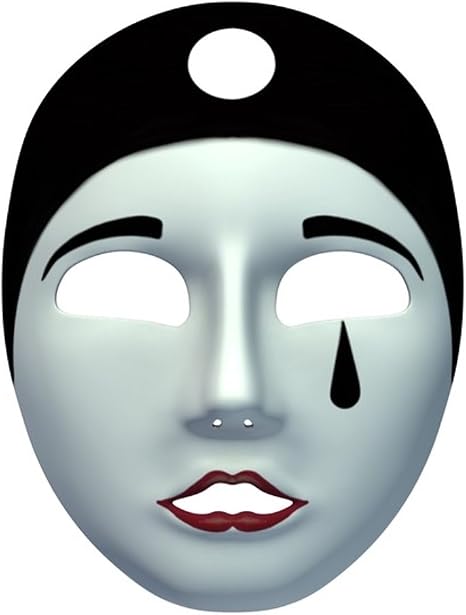
Pierrot Mask
Mesh, tulle, pleats, layered, ribbon lace-up.
- ✓ Victorian, Renaissance, Elizabethan costume props
- ✓ A-class soft cotton, skin-friendly, can be worn 24/7 without any itch or irritation
As an Amazon Associate, we earn from qualifying purchases.
From the comedic to the horrifying, Pierrot characters demonstrate anime's remarkable ability to take Western cultural elements and transform them into something distinctly Japanese. Whether ruling kingdoms of despair, draining energy as magical monsters, or pursuing bounty hunters through neon-lit cityscapes, these characters prove that the sad clown's legacy continues to evolve and captivate audiences worldwide.
Which Pierrot character haunts your memory? Share your thoughts in the comments below!


